Advanced Gauging Technologies

Thickness & width measurement gauges

  • Home
  • Products
    • AGT800XT Non-Contact Laser Thickness Gauge
    • AGT400 Non-Contact Gamma Thickness Gauge
    • AGT Width Measurement Gauge
    • AGT Centerline Deviation Gauge
    • AGT Mult-Width™ Measurement and Verification Gauge
    • AGT800 Plastic Sheet Extrusion Thickness Gauge
    • AGT600 Industrial Contact Gauge Replacement
    • AGT600 LAB Lab & Line Side Thickness Sample Gauge
    • Thickness Gauge Upgrades
    • Pipe & Pole Wall Thickness Measuring System
    • Parts Store
    • S.P.C. & Reporting
    • Offline Data Analysis
    • Gamma, X-ray, Laser Gauge Comparison
  • Services
    • Isotope Source Recovery Services
    • Radiation Training
    • Service, Support, and Start Up
    • Troubleshooting Tips
    • Download Quick Support Program
  • Applications
  • Contact Us
    • Request Quote
  • (614) 873-6691

January 16, 2015 By Steve Venters

First AGT800 Of 2015 Goes To Nova Steel

019

021014

034

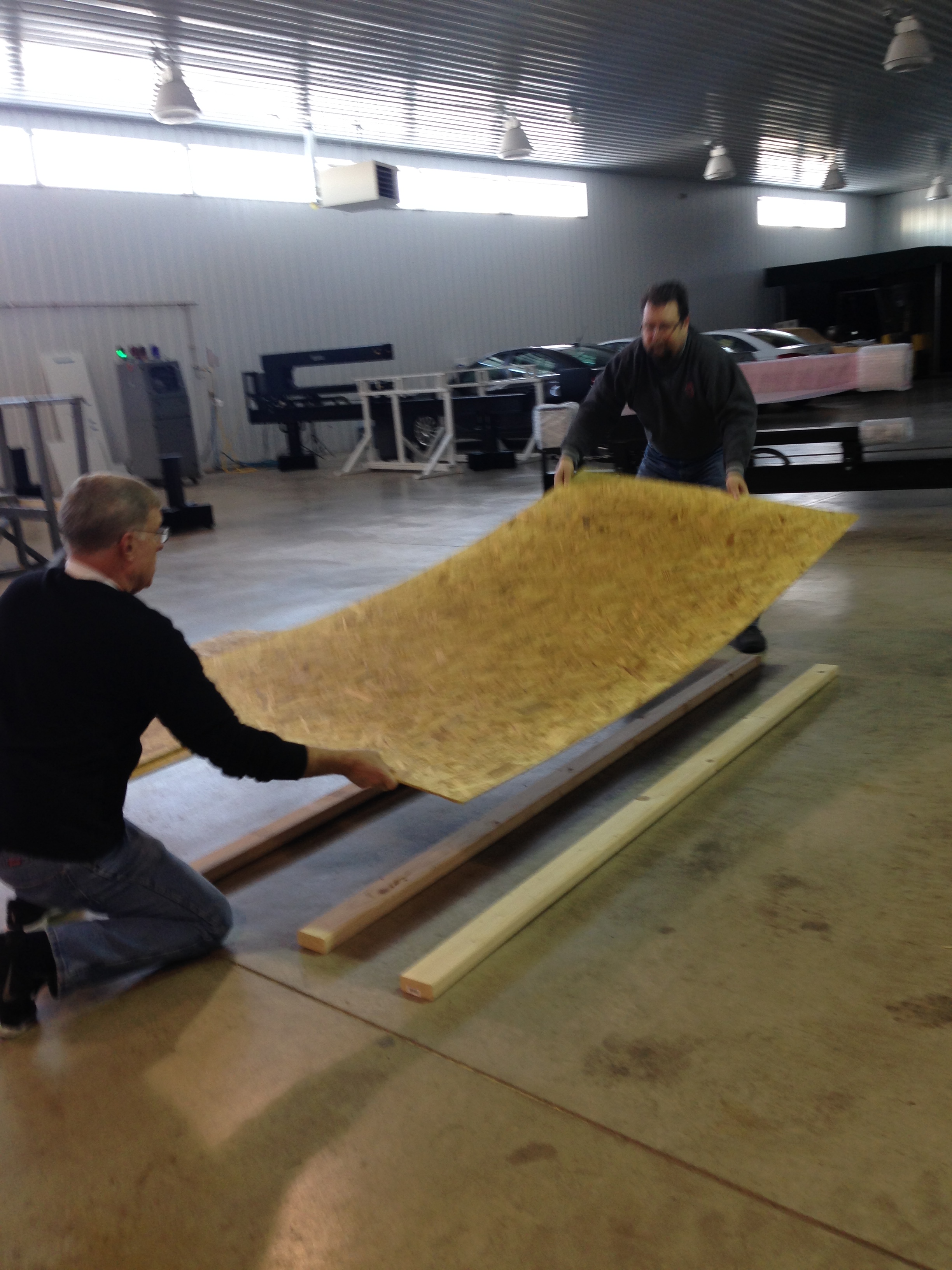
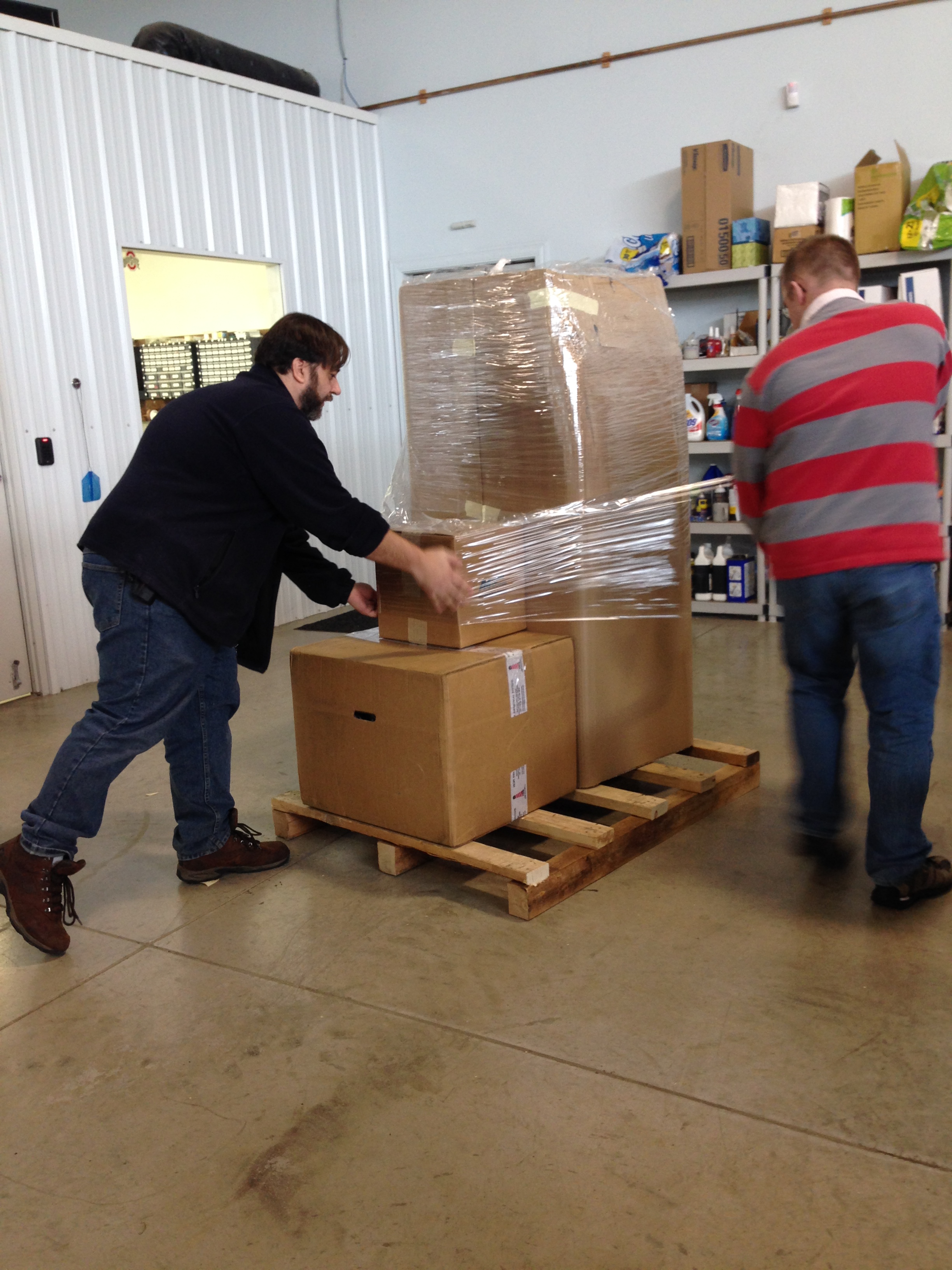
Advanced Gauging is pleased to announce that our first shipment of 2015 was a new AGT800 Laser Thickness Gauge.  The gauge was shipped on January 8th to Nova Steel in Stoney Creek, Ontario and will be installed on a refurbished 60” Pro Eco Slitter.  Vince Gallo, General Manager at Nova Steel, is very familiar with A.G.T. from his past experience at other companies and expressed immediate interest in the AGT800 soon after he joined Nova.  He visited A.G.T. in August to see the gauge in person and ended up issuing a purchase order before his return to Canada.

Although this is our first laser gauge shipment to Canada, we anticipate many more before the year is out.  We have already received a great deal of interest in the AGT800 from several Canadian service centers and we foresee no let-up in the number of inquiries we continue to receive on a regular basis.  Key benefits mentioned with most of these requests include the elimination of the need for a radioactive source, the fact that the AGT800 can measure virtually any type of material in coil, sheet or strip form, and the capability to measure up to .750” (19 mm) thick material.

To request a proposal or additional information, please feel free to contact Steve Venters or Tiffany Rea at www.Sales@AdvGauging.com or by calling (614) 873-6691.


Filed Under: AGT800, Sales & Marketing, Service, Staff

January 12, 2015 By Nick Hunkar

A.G.T. Supports The Buckeyes

Craig, Mike, Tiffany & Steve

All of our gauges are manufactured in the great state of Ohio. In honor of the National Championship Advanced Gauging Technologies would like to say GO BUCKS!

Filed Under: AGT800, Health and Fitness, Sales & Marketing, Service, Staff

December 12, 2014 By Steve Venters

AGT800 Laser Gauge Featured In American Metal Market 2014 Spotlight Article

AMM Cover Photo

Metals Testing Transformed By 21st-Century Technology

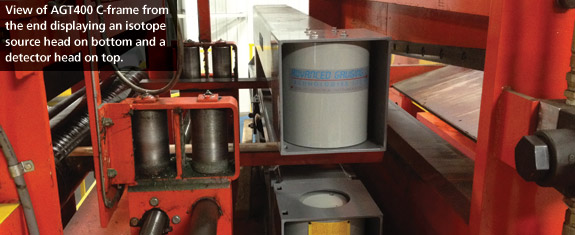
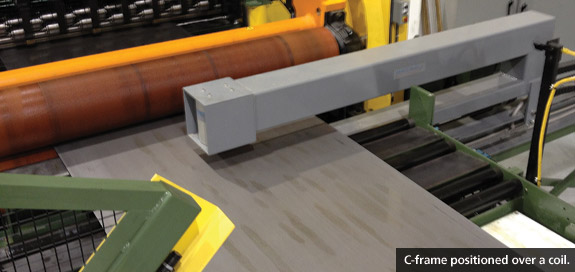
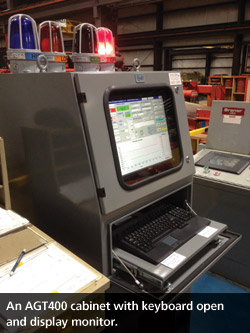
 While larger companies dominate a significant portion of the testing equipment market, some breakthrough technologies still come out of tiny mom-and-pop companies, reminiscent of the computer technology that came out of California garages a half-century ago.  For much of the past few decades, the thickness of coil, sheet or strip metal has been measured by service centers with isotope gauges such as the AGT400 manufactured by Advanced Gauging Technologies, LLC.  An isotope gauge typically consists of a computer, monitor, printer and advanced electronics located in an electronics cabinet connected to a C-frame that includes a source head and a detector head. The C-frame is mounted on the processing line so that the material being measured passes between the source and the detector head. Isotope gauges such as the AGT400 use a very small amount of radioactive material to measure the thickness of the material passing through the C-frame. “There is a shutter in the source head that opens and releases the radiation. The detector head located on the other side of the material measures the amount of radiation that passes through,” Steve Venters, Sales Manager at Advanced Gauging Technologies, explained.

Entrepreneur Ronald Cook and his son, Scott, co-founded Advanced Gauging Technologies nearly 20 years ago in Plain City, a small town halfway between Columbus and Marysville, Ohio. The company’s small staff manufactures several AGT400 isotope thickness gauges annually and services more than 400 gauges, most located in metal service centers across North America. About half the devices serviced are isotope thickness gauges manufactured by Advanced Gauging Technologies.  Isotope thickness gauges comprise only a small part of the total cost of a production line, and Advanced Gauging Technologies said its product typically “pays for itself within a year or less.” But there is one drawback to an isotope thickness gauge: the radioactive material used in the gauge. “It’s a very small amount of radioactive material, basically the same material used in many smoke detectors,” Venters said.  Still, because the material is radioactive it must be licensed by the U.S. Nuclear Regulatory Commission (USNRC) and inspected at regular intervals, which means paperwork requirements for both the vendor and the customer.

As a result, Advanced Gauging Technologies has spent the past two years designing and testing its new AGT800 laser thickness gauge, which it released for commercial use in late 2013.  “It works the same way as the isotope gauge,” Venters said, “except it uses laser sensors mounted on the C-frame to measure the thickness of the material.  One of the biggest advantages, of course, is that there are no federal or state licensing requirements.”  Advanced Gauging’s first production AGT800 has been installed on a new 96-inch Butech Bliss stretch leveler/cut-to-length line at an Alabama service center.  “We’re very excited about the opportunity to offer the AGT800 to our customers.  It also gives us the capability to measure additional types of materials, such as films and plastics, which opens the door for new markets,” Venters said.  “Accordingly, we are anticipating a pretty good period of growth over the next few years.”

Filed Under: AGT800, Magazine Article, Service, Staff

October 28, 2014 By Nick Hunkar

AGT800 Laser Gauging System Ships TO FCP

Today, a new AGT800 Laser Thickness Gauge was shipped to Delta, Ohio.  This system will be for use on a 72” Butech Bliss/ Nelson Steel Pickle Line at Fulton County Processing, and will measure steel with a thickness range from .050” to .500”.

Filed Under: AGT800, Laser Gauge, Laser Thickness

September 26, 2014 By Todd Allen

Harnessing Light

Article by Gretchen Salois and appears in Modern Metals Magazine, September 2014

Above: A view of the AGT400’s C-frame from behind.

Optical sensors offer alternative to nuclear-based methods for thickness gauging

September 2014 – When talking radiation, red flags often pop up. News of reactor meltdowns and toxic leaks resulting in proverbial ghostlands like Chernobyl in Russia or seaside pollution in Fukushima, Japan, come to mind. But nuclear science serves a practical purpose when harnessed in a calculated and controlled environment.

Advanced Gauging Technologies LLC’s AGT400 isotope thickness gauge has been offered for the last 17 years and the company recently introduced its latest innovation in the form of the AGT800, a laser gauge the company believes will be the wave of the future for gauging thickness. Knowing the exact dimensions of material being processed can be both cost and time saving.

“Most service centers pay for their metal by weight. If the material they receive from their supplier is not the right thickness—let’s say they order 0.18 inch and receive 0.187 inch—they can end up overpaying or having to deal with an excessive amount of scrap,” says Steve Venters, sales manager for the Plain City, Ohio-based instrument maker.

MM-0914-sheet-image1

The need for improved and reliable accuracy is only growing, especially in the aerospace, automotive, military and high-end electronics markets, adds Venters. “Many of these customers require reports and charts to verify the material thickness they receive is within specifications. The reports generated by a thickness gauge can also help a service center gain and maintain their ISO certification. Choosing a supplier that is ISO certified can often be a requirement for many end users.”

The major difference between the AGT400 and AGT800 is the method by which the gauges measure material thickness. The isotope gauge uses a radioactive source, Americium 241. This radioactive source is harnessed in a controlled environment and is enclosed in a source head located beneath the material being measured. Gamma rays are emitted when the source head’s shutter opens.

“The rays, which pass through the material are measured by a detector head located above the material which contains an ionization chamber,” Venters explains. “The gamma rays then ionize the gas atoms in the chamber and an electrical current is created. The AGT400 uses a unique algorithm and proprietary software to convert this electrical current into an accurate measurement of the material being processed.”

The AGT400 is best suited for material ranging in thickness from 0.007 inch up to 0.25 inch. “It depends upon the exact material being measured,” Venters says. The upper limit can also be increased to 0.312 inch thick when a larger ionization chamber is used in the detector head. It has a proven accuracy range of +/- 0.20 percent or +/- 0.0005 inch. Typically, the operating environment and the type of line the gauge is located on have no significant impact on the gauge’s accuracy.

MM-0914-sheet-image2

The laser approach

Unlike the AGT400, the optical based system of the AGT800 laser gauge relies on advanced Keyence laser sensors to measure a material’s thickness. The Class II sensors are similar to the same sensors that scan bar codes at a retail store. “They do not generate heat and you can easily place your hand between the sensors and not feel a thing,” Venters says. “There are two sensors, one located above the material and one below it.” Each sensor sends a beam of light that strikes the material, which is then reflected back to the sensor’s receiving mirrors.

“The sensors know exactly how far each beam has traveled and they also know the exact distance between each other,” Venters continues. “This information is used to calculate with extreme accuracy the thickness of the material being measured.”

A third sensor can be added when the material passing between the sensors is not level. Mounted alongside the top sensor, it is
used to determine the passline angle of the material and then calculates the angle and applies a correction factor.

MM-0914-sheet-image3

The AGT800 is designed to measure materials with a thickness range of 0.04 inch up to 0.75 inch, “although there are options available to measure thinner gauge materials as well,” he adds. The accuracy range of the AGT800 is less than 25 microns (0.001 inch). It is also alloy insensitive—it can measure virtually any type of material in coil, strip or sheet form. “Because the AGT800 uses laser sensors instead of a radioactive source, there are no costly and time-consuming government regulations required, such as leak tests,” Venters says.

Both the AGT400 and AGT800 feature automatic SPC reporting, data storage and offline data analysis. Data is stored on the gauge itself and can also be stored on a network server for easy recall of reports, Venters says. These reports provide graphic representation of the strip thickness over a coil or sheet’s length. “Both gauges will notify the operator immediately when a material’s thickness is out of tolerance,” Venters says.

Regulatory requirements

Like any isotope gauge, the AGT400 is subject to state and federal regulations, which require AM241 be tested for leaks once every six months “or once every two years if the source is in storage and not in actual service,” Venters says.

The trade-off of not having to comply with regulatory reports with the laser gauge is that the AGT800 requires a cleaner and more stable operating environment than its isotope counterpart. “Since it is an optical-based system, it is more sensitive to excessive dust, scaling and oil lubricants that are often present on some processing lines,” Venters explains. “It also requires a more stable passline and material flow to ensure the laser sensors are not damaged during line start up and tailouts.”

Both AGT model gauges have two primary components, an electronics cabinet and C-frame. The electronics cabinet contains an industrial grade computer, electronics shelf, monitor, printer, keyboard and a heavy-duty backup batter unit. The C-frame is positioned on the processing line and includes either a source and detector head (AGT400) or laser sensors (AGT800). “The C-frame will also have two Photoeye sensors which allow the C-frame to know when it reaches the edge of a coil,” Venters says. “A tachometer is also used to measure the footage of the material being processed.” MM

Filed Under: AGT800, Magazine Article Tagged With: AGT400, AGT800, Laser, Magazine, Modern Metals

  • « Previous Page
  • 1
  • …
  • 19
  • 20
  • 21
  • 22
  • 23
  • Next Page »
  • Request Quote
  • Troubleshooting Tips
  • Customer Info
  • Parts Store
  • Terms & Shipping
  • Accreditation & Licensing
  • Statistical Process Control
  • About Us
  • News & Info
  • Newsletters
  • Contact Us
  • Careers
  • Privacy & Usage

8430 Estates Court
Plain City, Ohio 43064
(614) 873-6691
Sales@AdvGauging.com

  • Facebook
  • Instagram
  • LinkedIn
  • Pinterest
  • YouTube
AIST, NIST
Copyright © 2026 · Advanced Gauging Technologies, L.L.C.
USNRC, CNSC, ODH